
Why Low-Impact Cardio Is a Great Place to Start
We’ve all heard that one of the most effective ways to improve and strengthen your cardiovascular health, aside from eating healthily, is to perform cardiovascular exercises, popularly known as cardio workouts.
Yes, cardio is any physical activity that raises your heart rate and makes your heart beat faster. This form of exercise, especially when intense, challenges our endurance and can put stress on our joints and bones. It can be quite overwhelming if you are just starting your fitness journey, have weak joints, have sustained an injury, or are looking for gentler workouts.
Therefore, in this article, I’ll be explaining what low-impact cardio is, the best low-impact cardio exercises for beginners, how to choose the right low-impact cardio exercise for you, a 20-minute beginner low-impact cardio walkthrough, as well as tips you need to know before getting started.
Stick to the end of this article because it attempts to answer any questions you might have about low-impact cardio exercises and dissolve any resistance that might be stopping you from getting started.
What Is Low-Impact Cardio?
Low-impact cardio exercises are gentle workouts that exert little to no impact on the musculoskeletal system. As the name implies, they are a form of exercise that accelerates your heart rate and increases perspiration without putting excessive strain on your joints.
Low-impact workouts are often confused with low-intensity workouts, whereas these are two independent concepts. A low-impact exercise can be performed at any level of intensity, whether low or high. This means that a low-impact exercise can be high-intensity if it requires a lot of effort and energy to accomplish.
Exercises such as running and jumping are high-impact because they subject your bones and joints to the forces of the workout. In contrast, common exercises such as brisk walking and swimming are well-recognized low-impact exercises.
Below, we will discuss in detail some low-impact cardio exercises that every beginner, senior, or person recovering from an illness or injury may find beneficial.
The Best Low-Impact Cardio Exercises for Beginners
1. Walking
Walking is a low-impact workout and one of the most commonly performed forms of exercise. It is also one of the simplest ways to start doing cardio. Its versatility means that it can be done anywhere, from small spaces to large spaces, indoors or outdoors, on a treadmill, or around the house.
It does not take any special skills to walk. All you have to do is move one foot in front of the other while swinging your arms naturally. Because of its less dramatic style, people believe that walking does not benefit the body as much as most high-impact exercises. But that is not the case, as studies have indicated that people who expend the same amount of energy while walking can experience cardiovascular benefits similar to those who run or perform other high-impact cardiovascular exercises.
Walk for about 10 to 15 minutes at a comfortable pace, then gradually intensify the workout by increasing the duration and speed.
2. Marching in Place
Marching in place is another excellent type of low-impact workout. It involves lifting one foot after the other off the ground by raising your knees towards the ceiling. It is suitable for small spaces and does not require any workout gear or equipment to get started.
It requires you to stand upright with your feet hip-width apart and your elbows bent at a 90-degree angle. Then, perform alternate leg raises by lifting one foot at a time, with your knees pointing towards the ceiling, while swinging your bent arms naturally.
The marching-in-place exercise improves balance and is a great cardiovascular exercise that can be done regularly without putting excessive strain on your joints and bones. The height of the leg raises can be adjusted to what you are comfortable with, gradually raising your knees higher as you become more comfortable with the exercise.
3. Step-Touch
The step-touch exercise is a simple workout that is commonly used as a warm-up exercise because it effectively warms up large muscle groups and helps prepare the joints for movement with minimal impact. It improves balance, coordination, and rhythm, and the movements can be modified to suit anyone at any fitness level.
To perform the step-touch workout, step one foot to the side and bring the other foot to tap beside it, alternating from side to side. You can also move your hands naturally and bend your knees slightly to make the exercise more challenging, or take smaller steps and move more slowly to reduce its intensity.
4. Low-Impact Jumping Jacks / Step Jacks
This modified version of the jumping-jack technique, also known as the step jack, does not cause as much impact on the joints and bones as the traditional high-impact jumping jack.
While the high-impact jumping jack requires you to jump into the air and move your feet apart and together, the step jack replaces the jumping motion with a controlled stepping movement.
To perform the step jack, start by standing upright with your feet together and your hands by your sides. Next, step one foot out to the side while sweeping both arms outwards and bringing them together above your head. Once done, return your foot and hands to the starting position and switch to the other leg. Keep alternating between feet with each repetition.
The stepjack is another great exercise for warm-ups and cardio. It is suitable for beginners, seniors, and anyone wanting to minimize the impact on their joints.
5. Stationary Cycling
Stationary cycling is a low-impact workout that offers several health and fitness benefits, from boosting cardiovascular health and helping with weight management to strengthening the abdominal muscles and toning the leg muscles.
It involves using bicycle-like equipment generally known as a stationary bike, which is best suited for indoor workouts. Stationary bikes range from sophisticated options, such as the recumbent bike, to more affordable options, such as the fan or air bike.
Cycling for 10 to 15 minutes daily can help improve your heart health, build leg strength, and burn calories.
6. Swimming or Water Aerobics
Swimming is another very effective low-impact workout. It is a full-body workout that offers health and wellness benefits without putting excessive strain on your joints.
Swimming serves as a cardiovascular exercise by elevating your heart rate as you move through the water. It also provides a form of strength training because you engage major muscle groups, including your back, core, glutes, and quads, as you push against the resistance of the water.
Swimming is also known for its therapeutic effect in relieving stress. In swimming, every movement counts. This makes it a great option for athletes or fitness enthusiasts at different fitness levels. It can also be a good workout option for pregnant women who can swim, provided they have no medical contraindications and follow appropriate guidance.
7. Elliptical Training
The elliptical training machine, also known as the cross-trainer, is a stationary indoor machine that simulates walking, running, or stair climbing. It consists of movable handlebars alongside foot pedals that move your arms and legs in a preferred pattern and at a comfortable speed, with your feet remaining fixed on the pedals throughout the exercise.
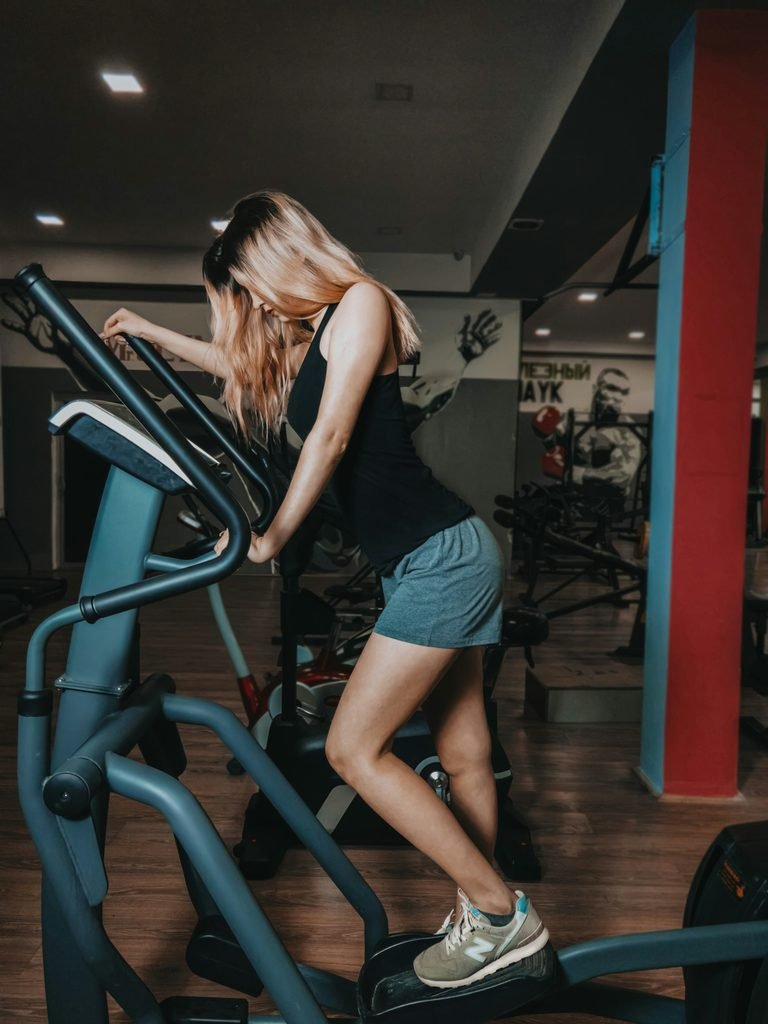
A cross trainer, when used consistently, can help enhance your cardiovascular health and strengthen your muscles. It provides a safer alternative to running. It is considered a low-impact workout because you do not exert the same impact on your bones and joints with every stride as you would when running.
8. Low-Impact Dance
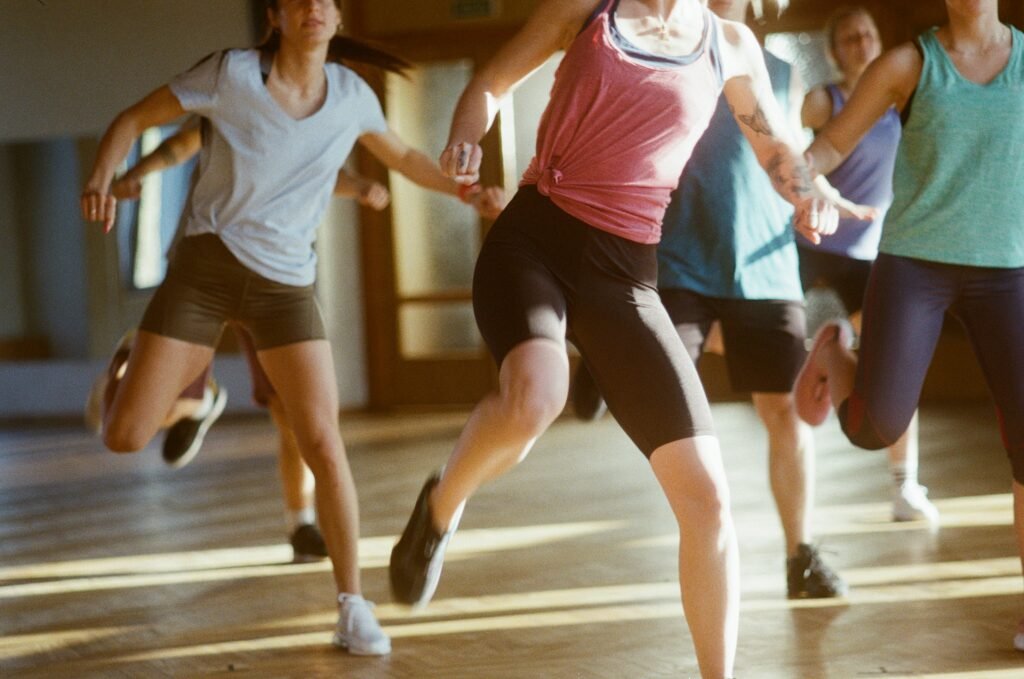
Dance workouts can be either low-intensity or high-intensity cardiovascular exercise. What differentiates the low-impact dance workout from the high-impact dance workout is that the former excludes jumping and forceful stomping, thereby reducing stress on your joints and bones.
Professionals usually design dance workouts to target specific muscles and to improve flexibility and mobility. Casually dancing for fun may not deliver the same structured benefits as a professionally designed dance workout. If this is an option you would love to try, several YouTube channels offer follow-along home dance workouts. And you are bound to find ones suitable for your fitness level, whether you are a beginner, intermediate, or professional dancer.
How to Choose the Right Low-Impact Cardio Exercise
Choosing the right low-impact workout for you depends largely on your physical needs, joint health, fitness goals, financial capacity, and the type of exercise you can do consistently.
While some people might strictly prefer machine-assisted workouts, such as the stationary bike and elliptical machine, others might prefer exercises that require no equipment, such as walking, marching, step-touch, and step jacks. Some might even prefer cardio workouts that involve a natural form of resistance, such as swimming.
The goal is to get the best out of every workout and stay fit without creating a hole in your pocket or incurring further health challenges. Therefore, if you have cardiovascular or joint concerns and are just beginning your fitness journey, it is advisable to consult a health professional so you can play it safe.
Depending on how much you can spend, you may also decide to work out at home, with or without machines, or join a fitness class or gym. Also, ensure that it is an activity you are comfortable doing and can sustain consistently over time to achieve your desired fitness results.
Sample 20-Minute Beginner Low-Impact Cardio Workout
Below is a 20-minute low-impact workout plan without equipment, suitable for beginners and seniors.
Warm-Up Phase — 5 Minutes
A warm-up is a vital part of any exercise routine because it prepares your muscles, joints, and entire body for the work ahead. Warming up before a workout helps your body transition smoothly from a slightly inactive state to a moderately or highly active state. So, follow these four steps to get started.
- Torso Twist: Gently twist your torso (your upper body) from side to side for 1 minute.
- Shoulder Rolls: Roll your shoulders forward by lifting them towards your ears, then roll them backwards and lower them. Continue in a circular motion for 1 minute.
- March in Place: Since this is a warm-up, perform the movement gently. Lift your knees one at a time towards your chest while swinging your arms naturally. Do this for 2 minutes.
- Active Rest: Casually pace around for 1 minute while regulating your breathing in preparation for the main workout.
Main Workout Phase — 10 Minutes
In this phase, it is time to get moving and work up a sweat. Pick one or two of your favorite low-impact cardio exercises, whether it is step jacks, marching in place, or side steps. Follow the techniques listed above and get yourself a good workout.
You can take a 30-second break between exercises or continue at a comfortable pace for the full 10 minutes, taking breaks whenever necessary.
Cool-Down and Stretching Phase — 5 Minutes
Now, this is the final part of your workout. At this stage, you perform stretches to relax your muscles and gradually reduce your movements, allowing your body to return to its resting state. Abruptly stopping a workout can leave you feeling lightheaded and your muscles feeling tense. And we don’t want that.
Therefore, try these simple, relaxing techniques to end your session on a good note.
- Walk: Yes, walking is a good way to cool down. Walk in place or over a short distance at a slow pace for 1 minute while inhaling through your nose and exhaling through your mouth.
- Quad Stretch: Next, hold onto a chair or wall with one hand, then pull one heel towards your glutes with the other hand and hold for 20 to 30 seconds per side. Do this for 2 minutes, allowing time to stretch each side.
- Seated Hamstring Stretch: Sit on the floor with your legs stretched out in front of you. Then, bend forward gently from your hips and reach your hands towards your toes as far as is comfortable. Hold for 10 seconds. Inhale as you lean forward and exhale as you return to an upright position. This stretches your hamstrings and lower back. Repeat gently for 2 minutes.
6 Tips for Making Low-Impact Cardio More Effective
- Start at Your Own Pace: You should always start at a comfortable pace, especially when you have just begun your fitness journey. Then, gradually increase your speed and duration as your fitness and endurance levels improve.
- Maintain Proper Form: Always prioritize proper technique over speed and duration to avoid workout injuries. Maintaining proper form during every exercise will help you progress more safely in your fitness journey.
- Move Your Arms: Swinging your arms adds intensity to your low-impact cardio workout without necessarily increasing the impact on your joints. So, whenever you feel like increasing the intensity of your workout and are tempted to perform movements that involve stomping, try moving your arms instead.
- Stay Consistent: Aim to exercise regularly throughout the week rather than doing too much in one session.
- Stay Hydrated: Staying hydrated is very important for an effective workout and efficient post-workout recovery. Therefore, to avoid dehydration, drink water before and after exercising and take small sips during your workout when needed.
- Listen to Your Body: Take breaks when necessary, modify movements that cause discomfort, and stop if you experience chest pain, dizziness, or unusual shortness of breath.
Conclusion
You can have a great low-impact workout that is both efficient and effective for your particular cardiovascular fitness goals without having to perform exercises that put excessive strain on your joints.
Walking, marching, swimming, elliptical training, and many more low-impact workouts can help keep you fit while minimizing the impact on your bones and joints. Pick a routine you are comfortable with, then gradually build up your activity, intensity, and duration as your fitness improves.
Remember to stay hydrated, maintain proper form, work out consistently, and consult a doctor if the need arises.